360-icon download left-arrow left-doublearrow nav-dot pdf-icon rss-icon search-icon spot-icon subnavi-icon close-icon info-icon
Fendt 936 Vario in continuous operation on one of the world's largest agricultural farms. The machine has been working reliably on TİGEM's agricultural land in Turkey since 2011.

A Fendt 936 Vario has clocked up over 81,000 operating hours in 15 years – and is still working reliably.

Tarım İşletmeleri Genel Müdürlüğü (TİGEM) Turkey, Fendt 936 Vario & 939 Vario

A Fendt 936 Vario has clocked up over 81,000 operating hours in 15 years – and is still working reliably.

Over 81,000 operating hours – a Fendt 936 Vario in Turkey

A Fendt 936 Vario has clocked up over 81,000 operating hours in 15 years – and is still working reliably. Its location: one of TİGEM’s state-owned agricultural enterprises in Turkey.
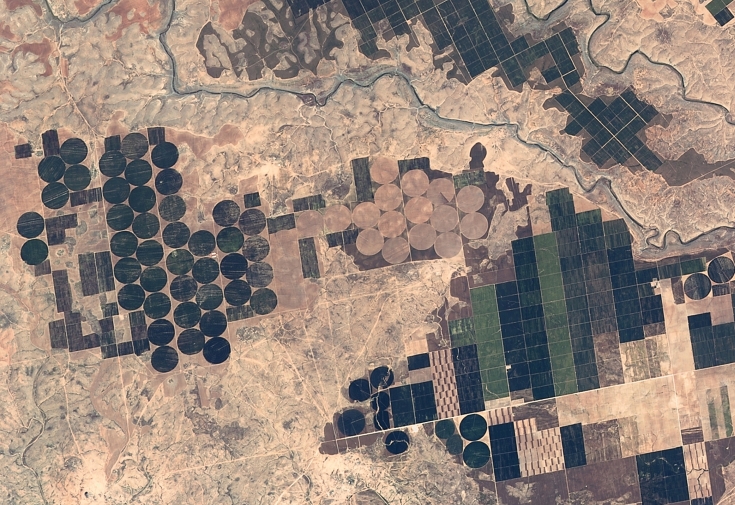
Aerial/satellite view of TİGEM's extensive agricultural land near the Syrian border. Center pivot irrigation systems and large field plots characterize farming operations across more than 143,000 hectares.

TİGEM: 350,000 hectares serving Turkish agriculture

Thanks to its extensive agricultural land, Turkey is one of the world’s ten largest agricultural producers. It is a leading producer of hazelnuts, figs, apricots, cherries and quinces. TİGEM (Tarım İşletmeleri Genel Müdürlüğü), founded in 1984, is a state-owned agricultural enterprise. Its 17 affiliated farms cultivate around 350,000 ha of land nationwide. In addition to producing cereals, fodder crops, oilseeds and fruit, the farms have another role: they test modern agricultural technology and promote new cultivation methods across the country. In doing so, they prepare Turkish farmers for the consequences of climate change and the growing demands of the population.

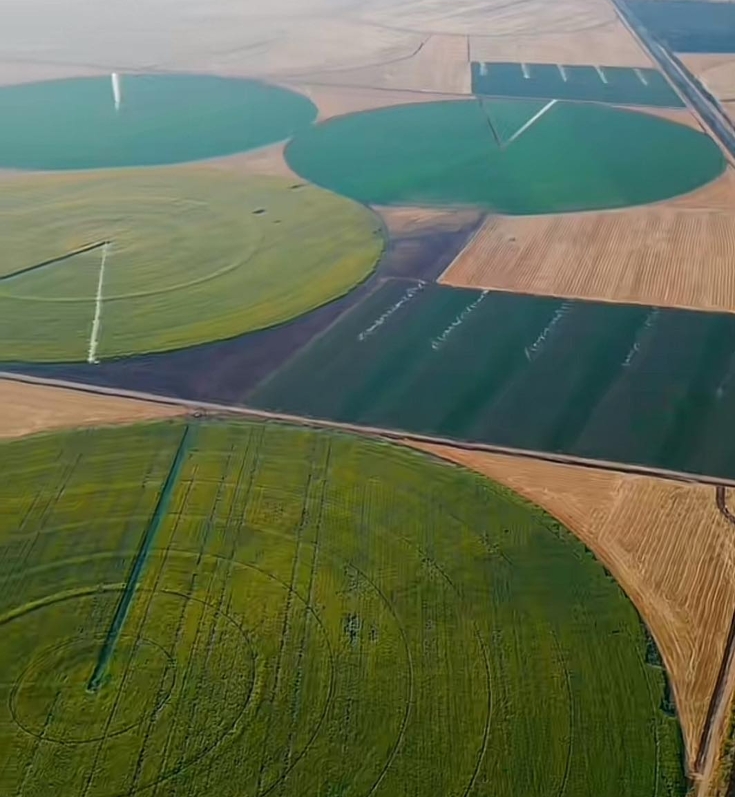
Aerial view of the irrigated farmland of the state-owned agricultural enterprise TİGEM in Ceylanpınar, Turkey. Center pivot irrigation systems ensure high yields across large-scale agricultural land.

Ceylanpınar: 143,000 hectares on the Syrian border

The TİGEM site in Ceylanpınar is located near the Syrian-Turkish border. Originally founded as an agricultural enterprise in 1937, it was taken over by TİGEM in 1984. With over 143,000 ha of cultivated land and a high proportion of irrigated land, it ranks among the largest single farms in the world. Crops grown include wheat, barley, lentils and fodder crops such as vetch, alfalfa and silage maize, as well as sunflowers. Other plots are used to grow pistachios, olives and grapes. In addition to arable farming, the Ceylanpınar site rears 102,000 Awassi sheep, Black Pied and Simmental cattle, and Damascus goats. There is also a special project to breed Asian gazelles for conservation purposes.

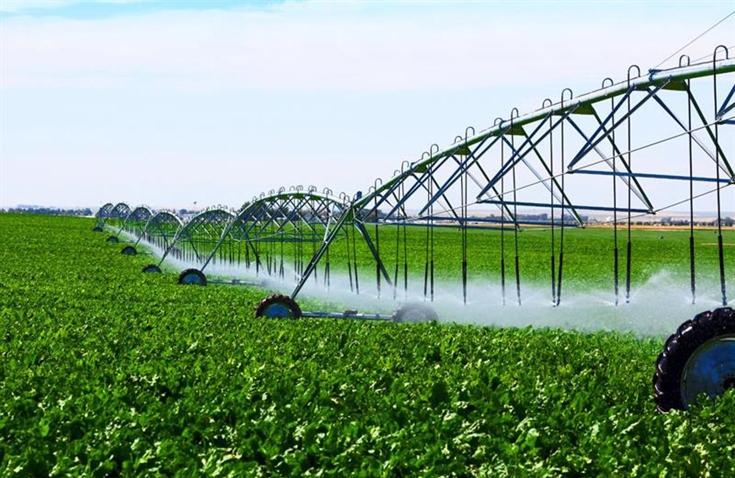
Center pivot irrigation system on the fields of the TİGEM farm in Ceylanpınar, Turkey. The expansion of irrigation infrastructure has significantly increased cereal yields across the agricultural operation.

Irrigation boosts yields

Irrigation plays a central role in farming at Ceylanpınar. In 2008, 10,800 ha were connected to the irrigation system; by 2020, this figure had risen to over 67,000 ha. The target is 82,000 ha. This has had a measurable effect: cereal yields have risen from 2.5 t/ha to 5 t/ha. This also creates a lot of work for the farm's machinery.

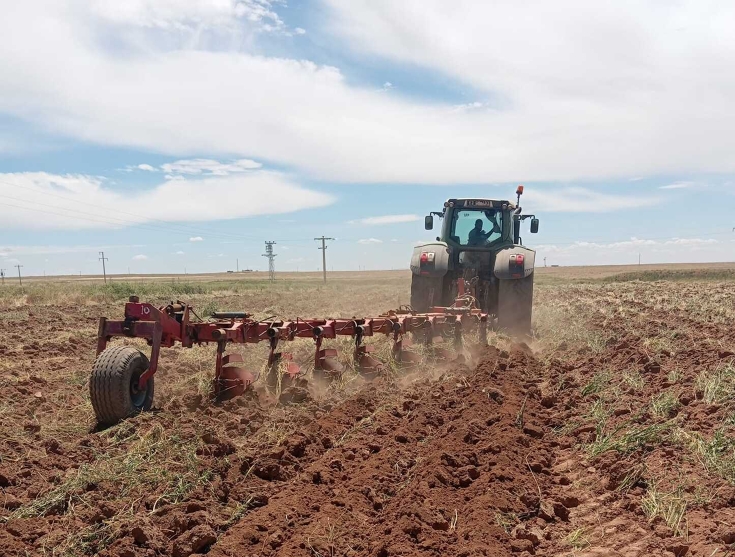
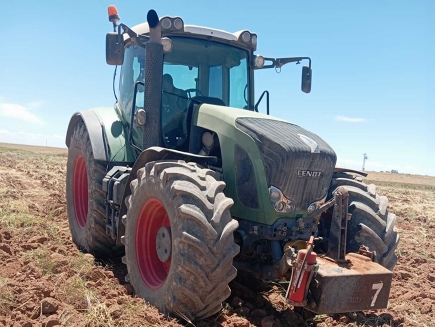
Fendt 900 Vario tractor ploughing the fields of TİGEM's Ceylanpınar operation in Turkey. The high-horsepower tractor works on the extensive farmland of one of the world's largest agricultural enterprises.

20 Fendt tractors – all with over 73,000 operating hours

Since 2011, 20 fourth-generation Fendt 900 tractors have also been operating in Ceylanpınar. With Vario transmission, Variotronic control via a terminal and a gross vehicle weight of up to 18 tonnes, they are designed for the heavy field work carried out on the farm. “The Fendt tractors have been used on the farm for years in three-shift operation. So they’ve been running round the clock,” explains Ozan Korkmaz, deputy head of after-sales service at Fendt sales partner Kutlucan.

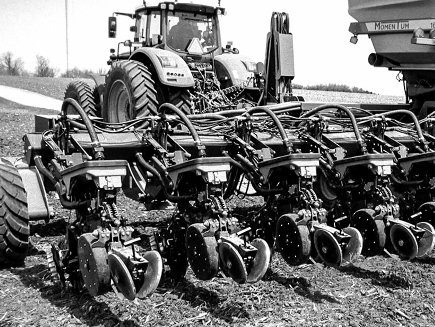
Today, all 20 machines have clocked up an average of over 73,000 operating hours. A 2011 Fendt 936 Vario has reached the impressive figure of over 81,000 hours – and is still in daily use on the arable fields. “We’ve recently switched to a two-shift system,” says Enes Fil, an engineer at TİGEM. “For example, we use the 900 series with a combination of a 3-furrow front plough and a 10-furrow rear plough; this is made possible by the precise front hydraulics. During sowing, they are used in combination with a 12-row pneumatic seed drill.” The low fuel consumption reduces operating costs across the large areas. To ensure the machines remain available at all times, the farm maintains its own workshop with in-house technicians.