360-icon download left-arrow left-doublearrow nav-dot pdf-icon rss-icon search-icon spot-icon subnavi-icon close-icon info-icon
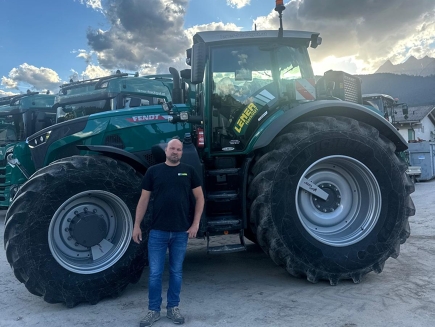
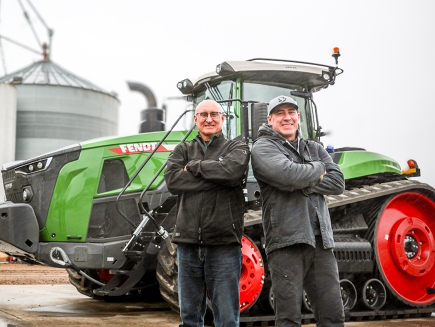
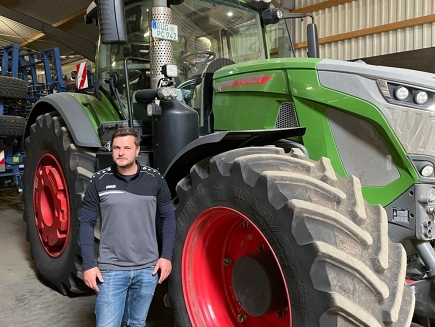
Peter Carstens with his Fendt 942 Vario at the Klaus Störtebeker Landwirtschaftsgesellschaft farm on the island of Rügen

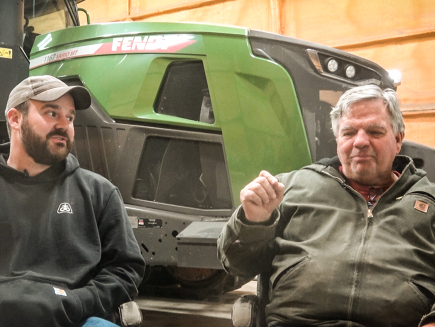
The continuously variable transmission, low fuel consumption and high resale value won us over.

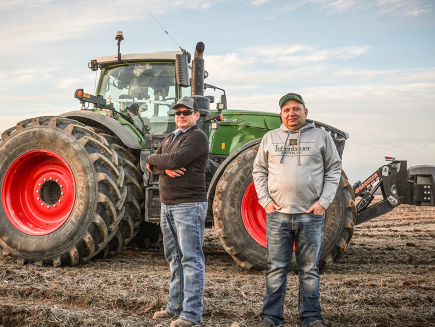
Peter Carstens Jr., owner of Klaus Störtebeker Landwirtschaftsgesellschaft mbH, Germany, with a Fendt 942 Vario and a Fendt 933 Vario Gen3.

The continuously variable transmission, low fuel consumption and high resale value won us over.

With a view of the Baltic Sea: farming 1,000 hectares with Fendt

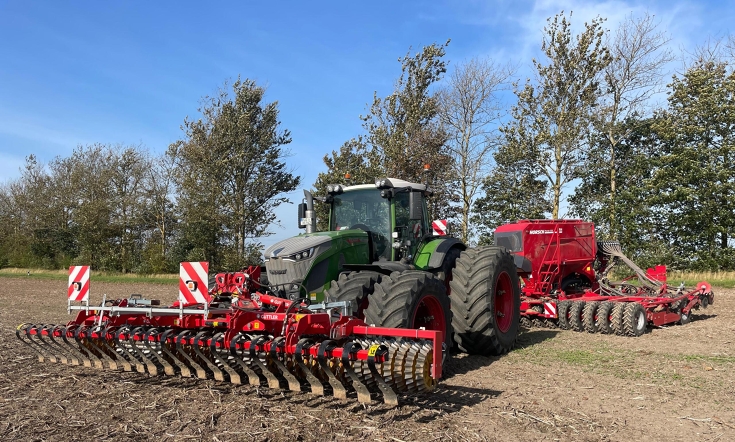
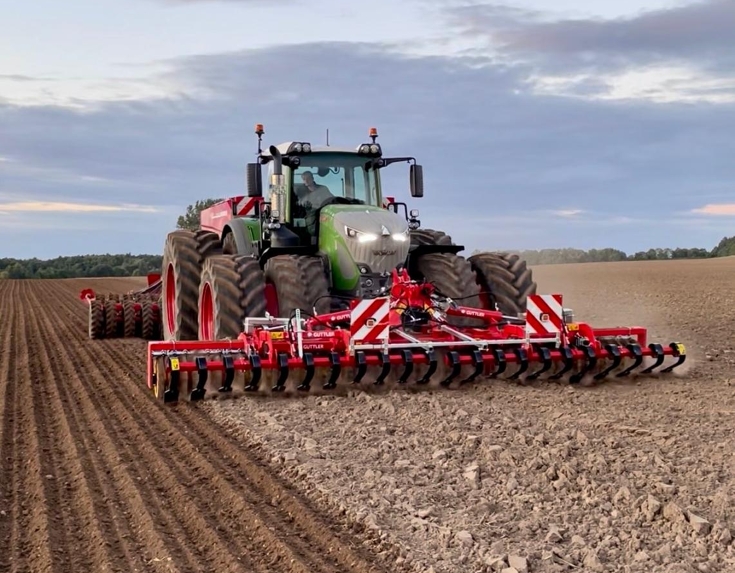
Fendt 942 Vario with dual wheels and a tillage implement preparing a seedbed in a field on the island of Rügen. The larger contact area helps protect the soil while providing excellent traction.

As Peter Carstens drives his Fendt 942 Vario over the hills above the Großer Jasmunder Bodden, his gaze sweeps far out over the Baltic Sea. Directly below his fields lies Europe’s largest open-air theatre – home to the famous Störtebeker Festival, with seating for up to 9,000 people. The name of his company could hardly be more fitting. Together with his father, he runs the Klaus Störtebeker Landwirtschaftsgesellschaft mbH in the heart of the island of Rügen, Germany.


On around 1,000 ha of consolidated land, the farm grows winter barley, rapeseed, wheat, rye and corn. A grassland farm managed organically with around 150 suckler cows and their calves complements the arable operation.

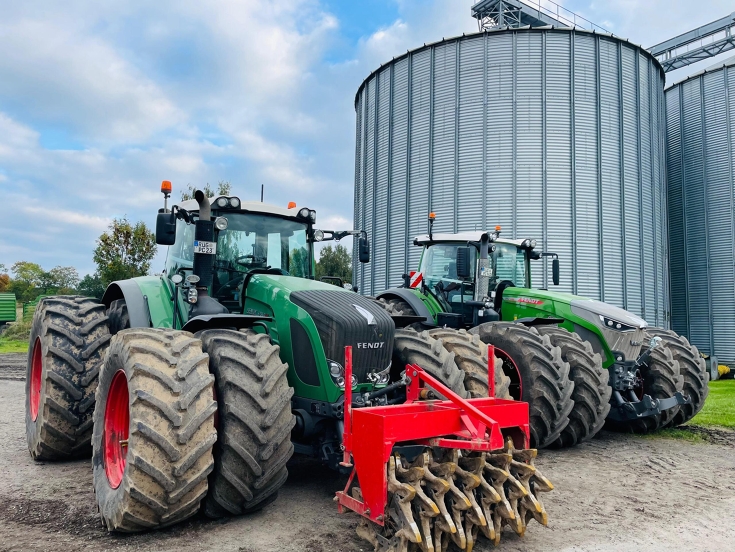
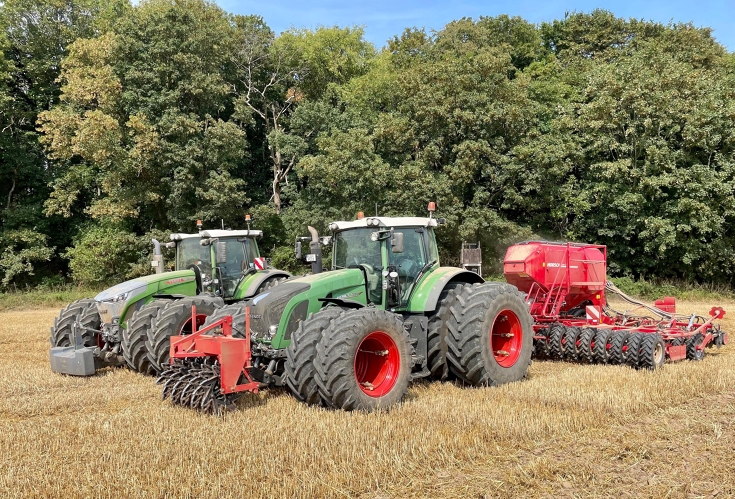
Two Fendt 900 Vario tractors with dual wheels seeding fields at Klaus Störtebeker Landwirtschaftsgesellschaft on the island of Rügen. Modern precision farming technology delivers high field efficiency while protecting soil structure.

Trusting in Fendt for two decades

The partnership with Fendt began in 2006 with a third-generation Fendt 930 Vario. The purchasing decision was a conscious one. “The continuously variable transmission, low fuel consumption and high resale value won us over,” recalls Peter Carstens. “Added to this is the excellent service provided by Raiffeisen Technik Nord-Ost, which is practically on our doorstep, just ten kilometres away.”


Today, the fleet comprises five Fendt tractors, a Fendt Cargo T telehandler, a Fendt Rotana round baler and Fendt greenland machinery. The farm also makes a visual statement: the tractors are fitted with the exclusive Fendt Design-Line Chrome.


The two most powerful machines on the farm are a Fendt 933 Vario and a Fendt 942 Vario. “Depending on the application, our tractors clock up between 800 and 1,100 operating hours per year. Our Fendt 933 Vario will soon reach the 10,000-hour mark,” reports Carstens.

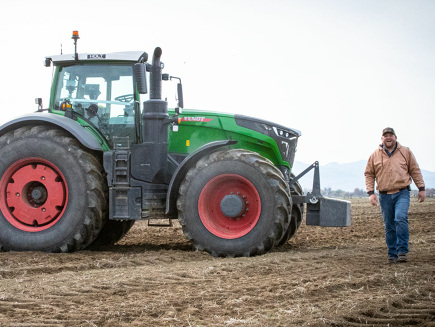
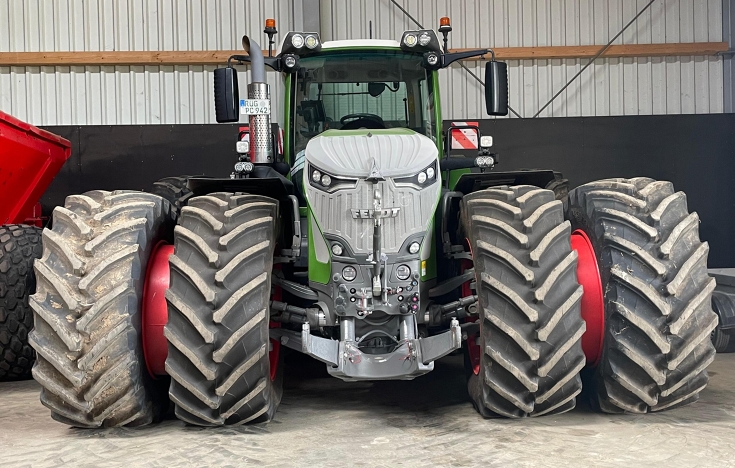
Fendt 942 Vario with dual wheels operated by Klaus Störtebeker Landwirtschaftsgesellschaft on the island of Rügen. The twin-wheel setup provides excellent traction, reduces soil compaction and supports efficient fieldwork on rolling terrain.

Duals for maximum efficiency

The Carstens family’s Fendt 942 Vario, fitted with dual tyres, is a rather rare sight on German fields. This specification is a key factor in the farm’s success when working on Rügen’s sometimes very undulating terrain. “When tilling the soil and sowing, we need maximum traction without damaging the soil structure,” Peter Carstens explains. “The dual tyres provide a larger contact area, reduce ground pressure and, at the same time, improve traction.”


On slopes in particular, the dual tyres save fuel and deliver powerful performance. The farm’s large, contiguous fields provide ideal conditions for this. “An intact soil structure is the foundation for healthy crops and stable yields. That is why we place great importance on soil-conserving practices.”

The Baltic Sea’s geographical advantage

Rügen offers the farm a natural advantage: whilst temperatures on the mainland are often significantly higher in spring and summer, the Baltic Sea has a temperature-regulating effect. “In some years, temperatures here are up to five degrees lower than on the mainland,” Carstens explains. “Our crops benefit from this, particularly in dry and hot summers.” Together with the fertile soil, this creates ideal conditions for high and consistent yields.
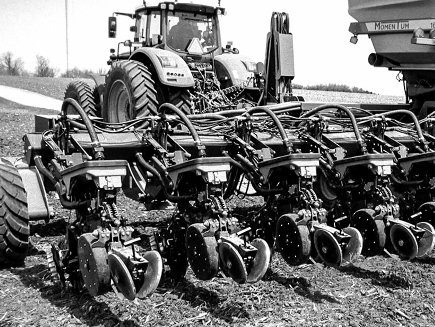
Fendt 942 Vario with dual wheels, a tillage implement and a seed drill during seeding operations on the agricultural fields of the Carstens family on the island of Rügen.

Precision with FendtONE

Good soil and a mild climate alone are not enough on their own. To maximize yields on Rügen’s challenging terrain, the farm relies consistently on precision technology. The Fendt Guide guidance system, featuring a Trimble receiver and RTK correction signal, ensures centimetre-precise operation. Section Control prevents overlaps during sowing, fertilisation and crop protection, whilst Variable Rate Control adjusts application rates to suit specific locations. “Our land is challenging. FendtONE has a logical structure and is intuitive to use. This makes work easier for us and our staff day in, day out.”

High-quality feed for organic cattle

Alongside arable farming, the rearing of organic suckler cows plays a central role on the farm. Since 1992, the farm has been rearing around 150 suckler cows and their calves have been reared on the farm in accordance with organic guidelines. To care for the animals over the winter, the Carstens family relies on Fendt greenland machinery. The Fendt Rotana round baler produces approximately 1,500 bales of hay, 500 bales of haylage and a further 1,500 bales of straw annually.

To ensure high productivity during harvest time, the farm uses a Fendt Slicer mower combination comprising a 3-metre front mower and a 4-metre rear mower. “When it comes to the hay harvest in particular, every window of good weather counts. With our machinery, we can react quickly and produce high-quality forage for our animals.”

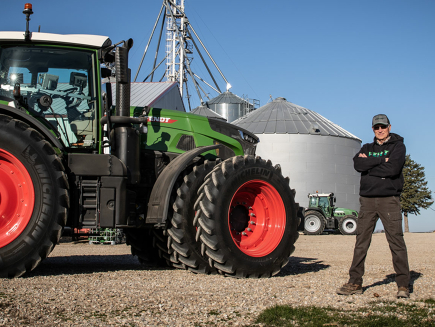
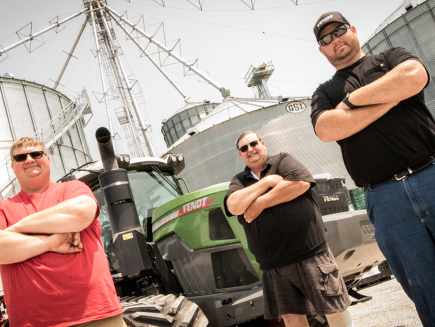
Two Fendt high-horsepower tractors with dual wheels in front of the grain silos at the Carstens family farm on the island of Rügen. Modern agricultural machinery for large-scale farming and efficient field operations.

Rügen, Fendt and family ties

The Carstens family combines tradition and progress by using modern technology and innovative farming methods in their unique location on Germany’s largest island. The impressive backdrop of the Baltic Sea is not only aesthetically pleasing, but also a decisive factor in the success of the family farm.